AI-Driven Cyber Threat Intelligence System Using Graph Analytics and Adaptive Intrusion Detection Mechanisms
Keywords:
Cyber Threat Intelligence, Adaptive Intrusion Detection, Graph Analytics, Graph Neural Networks, Transformer Threat AnalyticsAbstract
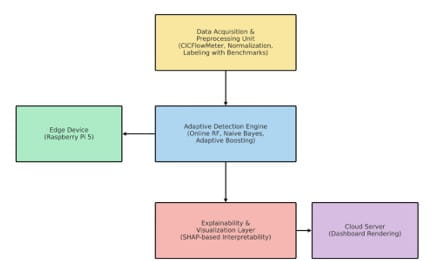
The rapid growth of distributed digital infrastructures, cloud computing environments, Internet of Things (IoT) ecosystems, intelligent enterprise systems, and large-scale communication networks has significantly increased the complexity and frequency of modern cyber threats. Contemporary cyber-attacks such as ransomware, advanced persistent threats (APTs), phishing campaigns, distributed denial-of-service (DDoS) attacks, insider threats, malware propagation, and zero-day exploits continuously evolve in sophistication and scale, thereby challenging conventional cybersecurity defense mechanisms. Traditional rule-based intrusion detection systems and signature-driven threat analysis frameworks frequently fail to identify dynamic and previously unseen attack patterns across distributed intelligent infrastructures. Modern cybersecurity systems therefore require adaptive, scalable, and intelligent threat analytics capable of real-time cyber situational awareness and proactive defense coordination. This research proposes an AI-Driven Cyber Threat Intelligence System Using Graph Analytics and Adaptive Intrusion Detection Mechanisms. The proposed framework integrates graph-based cyber relationship analytics, transformer-assisted threat intelligence, graph neural network (GNN)-driven attack propagation reasoning, adaptive intrusion detection mechanisms, reinforcement-driven cyber optimization, and explainable cybersecurity intelligence to support scalable and resilient threat monitoring across distributed digital infrastructures. The framework continuously analyses communication behavior, user interactions, network traffic streams, malware propagation pathways, authentication events, and infrastructure relationships to identify anomalous cyber activities and coordinated attack patterns in real time.